post 1
Would you like me to make these very short and catchy (like a tagline) for a signup form, or slightly longer and informative for a
Transporting oversize and overweight loads through Florida requires proper permitting from the Florida Department of Transportation (FDOT). State to State Permits specializes in obtaining fast, accurate Florida oversize permits for carriers, owner-operators, and logistics companies operating across all 67 counties in the Sunshine State. Whether you’re hauling construction equipment, industrial machinery, manufactured homes, or heavy cargo through Miami, Tampa, Orlando, Jacksonville, or anywhere in Florida, we ensure your loads remain road-legal and compliant with FDOT regulations and Florida statutes.
(727) 616-5006
ORDERS@STSPERMITS.COM
Our comprehensive Florida permit services cover every type of oversize and overweight load operating on state highways, county roads, and the Florida Turnpike system. We handle trip permits valid for five consecutive days, annual blanket permits for repetitive hauls, specialized permits for mobile homes and modular buildings, and superload permits for exceptionally large movements. With decades of combined experience in the trucking and permitting industry, our team understands the unique requirements of FDOT regulations and Florida’s diverse infrastructure from the panhandle to the Keys. We provide personalized support throughout the entire permitting process, working directly with FDOT permit offices to secure your authorizations quickly. Most routine applications receive approval within three to five business days, ensuring your operations experience minimal delays and maximum efficiency while maintaining full regulatory compliance.
Understanding Florida legal load limits helps determine when you need an oversize or overweight permit. In Florida, vehicles and loads can operate without special permits if they stay within these dimensions: width of 8 feet 6 inches or 8 feet on roadways narrower than 12 feet, height of 13 feet 6 inches or 14 feet for qualifying automobile transporters, length of 75 feet overall for vehicle combinations, front overhang of 3 feet maximum, rear overhang of 15 feet maximum, and gross vehicle weight of 80,000 pounds. Single-unit vehicles cannot exceed 40 feet in length, and semi-trailers hauling automobiles cannot exceed 50 feet unless meeting specific qualifications under Florida Statutes. Any load exceeding these legal maximums requires proper permitting before traveling on Florida roads. Operating without required permits results in substantial fines starting at $500, penalties including license suspension, potential liability for road damage, vehicle impoundment, and significant delays to your delivery schedule.
The Florida Department of Transportation offers several permit categories designed for different hauling needs and trip frequencies. Trip Permits authorize loads exceeding legal dimensions for one specific journey from origin to destination, remaining valid for five consecutive days to complete the movement. These permits accommodate loads up to 16 feet wide, 18 feet high, and 150 feet long for routine applications. Annual Blanket Permits allow multiple trips over 12 months with the same vehicle configuration and specified routing, covering loads up to 14 feet wide, 18 feet high, and 120 feet long, providing excellent value for carriers making frequent Florida hauls. Mobile Home Permits serve the specialized needs of manufactured housing transport with specific dimensional allowances and routing requirements. Crane Permits accommodate self-propelled construction equipment with unique dimensional characteristics. All permits require loads to be non-reducible, meaning they cannot be disassembled into smaller components for legal transport. Applicants must provide detailed vehicle specifications including make, model, Vehicle Identification Number, axle configurations, and weight distributions. Insurance certificates demonstrating adequate liability coverage must accompany permit applications to ensure financial responsibility for potential infrastructure damage or public safety incidents.
Florida oversize and overweight permit fees vary based on permit type, load dimensions, weight classifications, and trip duration. Oversize trip permits for loads up to 14 feet wide, 18 feet high, or 120 feet long cost $25 for seven-day validity. Annual oversize permits for the same dimensional limits cost $250, delivering significant savings for carriers making multiple trips throughout the year. Overlength permits for semi-trailers between 53 feet and 57 feet 6 inches or kingpin distances exceeding 41 feet cost $10 for trip permits and $30 for annual authorizations. Overweight permit costs calculate based on gross vehicle weight and distance traveled. Loads up to 95,000 pounds pay $0.27 per mile for trip permits and $240 for annual permits. Weight categories increase progressively: 112,000 pounds costs $0.32 per mile or $280 annually, 122,000 pounds costs $0.36 per mile or $310 annually, 132,000 pounds costs $0.38 per mile or $330 annually, 142,000 pounds costs $0.42 per mile or $360 annually, 152,000 pounds costs $0.45 per mile or $380 annually, 162,000 pounds costs $0.47 per mile or $400 annually, and loads from 162,000 to 199,000 pounds cost $0.003 per 1,000 pounds per mile for trip permits or $500 for annual permits. Loads exceeding 199,000 pounds cost $0.003 per 1,000 pounds per mile with no annual permit option available. Additional fees apply for turnpike usage, bridge crossings, and special coordination requirements with local jurisdictions.

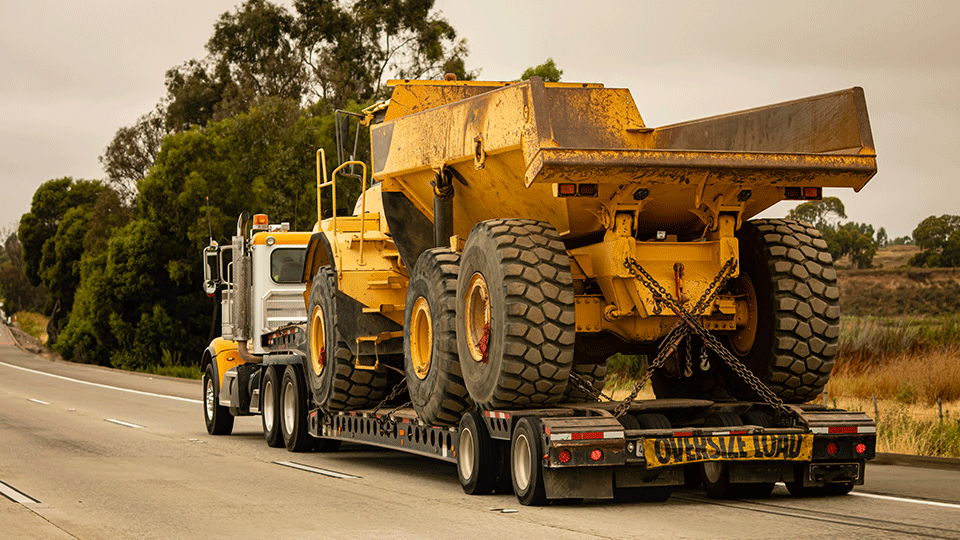
Florida mandates escort vehicles for oversize loads exceeding specific dimensions to ensure public safety and protect infrastructure. Loads over 12 feet wide require one certified pilot car escort, with two escorts required on some two-lane roads depending on traffic conditions and road geometry. Loads exceeding 14 feet wide require one front escort and one rear escort on all roads. Loads over 15 feet wide must have at least two certified pilot cars, and police escorts may become necessary depending on the route and local requirements. Length triggers escort requirements when loads exceed 75 feet, requiring one rear pilot car escort. Loads over 95 feet require one escort vehicle positioned to maximize visibility and traffic management. Height restrictions require written route surveys for loads exceeding 15 feet tall or loads over 14 feet 6 inches on some two-lane routes to verify overhead clearances including bridges, overpasses, traffic signals, and utility lines. Loads over 16 feet high require two escort vehicles. Rear overhang extending more than 20 feet past the center of the rear axle may require one pilot car to warn following traffic. Loads exceeding 250 feet in length and 16 feet in height require two escorts. All escort vehicles must weigh more than 2,000 pounds with gross vehicle rating less than 26,000 pounds, display OVERSIZE LOAD signs on front and rear, mount rotating, strobe, or flashing amber lights visible from at least 500 feet, and maintain two-way radio communication with the permitted vehicle at all times. Escort vehicle operators must complete certification programs recognized by Florida or reciprocal states including Arizona, Colorado, Georgia, Minnesota, North Carolina, Oklahoma, Virginia, Washington, and Wisconsin.
The FDOT Permit Application System streamlines the application process for Florida oversize and overweight permits. Access the system at pas.fdot.gov and create your account with complete company information, contact details, and business credentials. Select the appropriate permit type based on your load dimensions, weight, and trip frequency needs. Enter detailed vehicle specifications including year, make, model, VIN, license plate, registered weight, and current insurance information with policy numbers and effective dates. Input precise load dimensions with overall width, height, length, front overhang, rear overhang, and axle-by-axle weight distribution. Specify your complete route from origin to destination including all intermediate stops, county boundaries crossed, and turnpike segments if applicable. Upload required supporting documents including insurance certificates showing adequate liability coverage, vehicle inspection reports if required for your equipment type, and any special authorization letters from manufacturers or shippers. Review routing requirements and pilot car mandates generated by the system based on your load characteristics. Submit your application electronically for review by FDOT permit specialists who analyze dimensions, weights, routes, and compliance with all applicable regulations. Pay permit fees through the online system using credit cards, or establish an escrow account for frequent permit purchasers to streamline payment processing. Most routine trip permits receive approval within three to five business days, while annual blanket permits may take up to ten business days for complete processing and authorization. Once approved, download and print your permit ensuring you carry the original document during transport along with all supporting documentation and insurance certificates readily accessible for law enforcement inspection.
(727) 616-5006
Choosing between trip and annual permits depends on your Florida hauling frequency and operational patterns. Trip Permits authorize one specific journey from designated origin to destination over five consecutive days, costing $25 for oversize loads up to 14 feet wide, 18 feet high, or 120 feet long. Overweight trip permits calculate based on per-mile rates multiplied by your route distance, providing cost-effective authorization for occasional hauls or unique loads with varying dimensions. Trip permits offer routing flexibility and accommodate special circumstances on a case-by-case basis. Annual Blanket Permits provide year-round authorization for unlimited trips using the same vehicle configuration with consistent load dimensions and specified routing. Annual oversize permits cost $250 for loads up to 14 feet wide, 18 feet high, and 120 feet long, while annual overweight permits range from $240 for loads up to 95,000 pounds to $500 for loads up to 199,000 pounds. Annual permits deliver tremendous value for carriers making frequent Florida hauls, breaking even after just ten trips for oversize loads and dramatically reducing administrative burden by eliminating repetitive applications. Annual permit holders must still verify current route conditions, comply with all escort requirements, and ensure loads stay within permitted dimensions for each movement throughout the validity period.
Extensive experience handling Florida oversized and overweight permits with fast approvals and full compliance.
Quick, flexible solutions for both trip and annual permits based on your load and route.
Simple online permitting with expert support for routing, limits, and escort requirements.
Lorem ipsum dolor sit amet, consectetur adipiscing elit. Ut elit tellus, luctus nec ullamcorper mattis, pulvinar dapibus leo.
Would you like me to make these very short and catchy (like a tagline) for a signup form, or slightly longer and informative for a
Welcome to WordPress. This is your first post. Edit or delete it, then start writing!
Superloads represent the largest and heaviest category of permitted movements in Florida. FDOT classifies loads as superloads when they exceed routine permit limits: over 16 feet wide, over 16 feet high, over 150 feet long, or weighing over 200,000 pounds. Superload permits demand comprehensive engineering reviews, detailed route surveys, bridge capacity analysis, and coordination among multiple agencies including FDOT, Florida Highway Patrol, local municipalities, county governments, and utility companies. Applications require detailed load specifications, axle configurations, weight distributions, and complete equipment descriptions with photographs showing all dimensional extremities. FDOT engineers analyze proposed routes examining bridge load ratings, pavement structural capacities, intersection geometries, overhead clearance restrictions, and roadway widths. Physical route surveys verify theoretical analysis by measuring actual conditions including bridge structures, overhead utilities, traffic signal heights, and potential obstacles. Utility companies must approve and sometimes temporarily relocate power lines, communication cables, or other infrastructure obstructing the load path. This extensive coordination process typically requires 30 days or more depending on route complexity, load characteristics, seasonal restrictions, and scheduling among involved agencies. Additional fees apply for superload permits including engineering analysis charges, route survey costs, utility coordination expenses, and law enforcement escort services. Carriers should submit superload applications well in advance of planned move dates to accommodate extended approval timelines and avoid costly schedule disruptions.
Years of handling single-state and multi-state permits with accuracy and efficiency.
Quick processing to help you keep moving without costly downtime.
Easy online requests, expert guidance, and friendly support every step of the way.
Transporting oversized loads on Florida’s turnpike system incurs additional tolls beyond standard passenger vehicle rates. Turnpike tolls calculate based on number of axles, vehicle classification, and distance traveled through toll sections. Oversize and overweight vehicles typically fall into higher toll classes, paying premium rates that reflect increased wear on toll road infrastructure. The Florida Turnpike Enterprise maintains electronic toll collection through SunPass and E-PASS systems, but oversize loads often require manual toll processing at attended lanes. Carriers should budget for turnpike tolls when planning Florida routes and consider alternative routing on state highways when toll costs significantly impact transportation economics. Permit applications must specify turnpike usage, and some oversize loads may require advance coordination with turnpike operations for safe passage through toll plazas, especially when width exceeds standard lane configurations.
Dedicated support and reliable expertise that keeps your permits accurate, on time, and stress-free.
Quick processing with guaranteed accuracy, so your fleet stays compliant and on the move.
Don’t let permit delays disrupt your Florida operations. Contact State to State Permits at 727-433-5381 for immediate assistance with your oversize or overweight permit needs. Our experienced team provides instant quotes, answers your questions about FDOT regulations and Florida statutes, and begins processing your permits right away. Whether you need a trip permit for a one-time haul through Miami, annual permits for regular Tampa operations, or superload coordination for massive equipment moves across the state, we deliver the fast, accurate, professional service your business demands. Request your free quote today and experience the State to State Permits difference in Florida oversize and overweight permitting services.
In Florida, legal load limits without a permit are: Width 8 feet 6 inches (8 feet on roadways narrower than 12 feet), Height 13 feet 6 inches (14 feet for automobile transporters), Length 75 feet overall, Front overhang 3 feet, Rear overhang 15 feet, and Weight 80,000 pounds gross vehicle weight. Any load exceeding these dimensions requires an oversize or overweight permit from FDOT.
Florida oversize permit costs vary by dimensions and trip type. Single trip permits for loads up to 14 feet wide, 18 feet high, or 120 feet long cost $25 for 7 days and $250 for annual permits. Overweight permits range from $0.27 per mile for loads up to 95,000 pounds to $0.47 per mile for loads up to 162,000 pounds. Annual overweight permits cost $240 to $500 depending on gross vehicle weight.
Yes, escort vehicles are required in Florida based on load dimensions. Loads over 12 feet wide require one pilot car, with two escorts on some two-lane roads. Loads over 14 feet wide require front and rear escorts. Loads over 15 feet wide must have at least two pilot cars and may need police escorts. Loads over 75 feet long require one rear escort. Height over 15 feet requires a written route survey.
Florida oversize trip permits are typically issued within 3-5 business days through the FDOT Permit Application System. Trip permits are valid for 5 consecutive days to complete the journey. Annual blanket permits can take up to 10 business days for approval. Superload permits requiring route surveys and engineering analysis typically take 30 days or more for approval.
With a Florida oversize permit, the maximum width allowed is 16 feet for routine permits. Maximum height is 18 feet for routine permits, and maximum length is 150 feet with no set maximum overhang. Loads exceeding 16 feet wide, 16 feet high, or 250 feet long are classified as superloads and require special approval, route surveys, and extended processing time.
Night travel with oversize loads in Florida is restricted. Standard operating hours are one-half hour before sunrise to one-half hour after sunset. Some permits may allow night travel for specific loads with proper lighting and authorization. Weekend and holiday travel restrictions also apply to certain oversize loads. Always check your specific permit for authorized travel times and days.
A Florida superload permit is required for loads exceeding routine permit limits: over 16 feet wide, over 16 feet high, over 150 feet long, or over 200,000 pounds. Superloads require detailed route surveys, engineering analysis, bridge capacity studies, utility coordination, and typically take 30 days or more for approval. Additional fees and stricter travel restrictions apply to superload movements.
Apply for Florida oversize permits through the FDOT Permit Application System at pas.fdot.gov. Register your account, enter your vehicle specifications and load dimensions, specify your complete route from origin to destination, and submit payment by credit card or escrow account. The system processes applications and typically issues permits within 3-5 business days for routine loads.
A Florida trip permit authorizes one specific journey from origin to destination, valid for 5 consecutive days, costing $25 for oversize loads. Annual blanket permits allow multiple trips over 12 months with the same vehicle configuration and specified routing, costing $250 for oversize loads up to 14 feet wide and $240-$500 for overweight loads depending on weight class.
Yes, Florida requires pilot car operators to complete state-recognized certification programs. Florida accepts certifications from Florida, Arizona, Colorado, Georgia, Minnesota, North Carolina, Oklahoma, Virginia, Washington, and Wisconsin. Escort vehicles must weigh more than 2,000 pounds with gross vehicle rating under 26,000 pounds, display OVERSIZE LOAD signs, and have amber flashing lights visible from 500 feet.